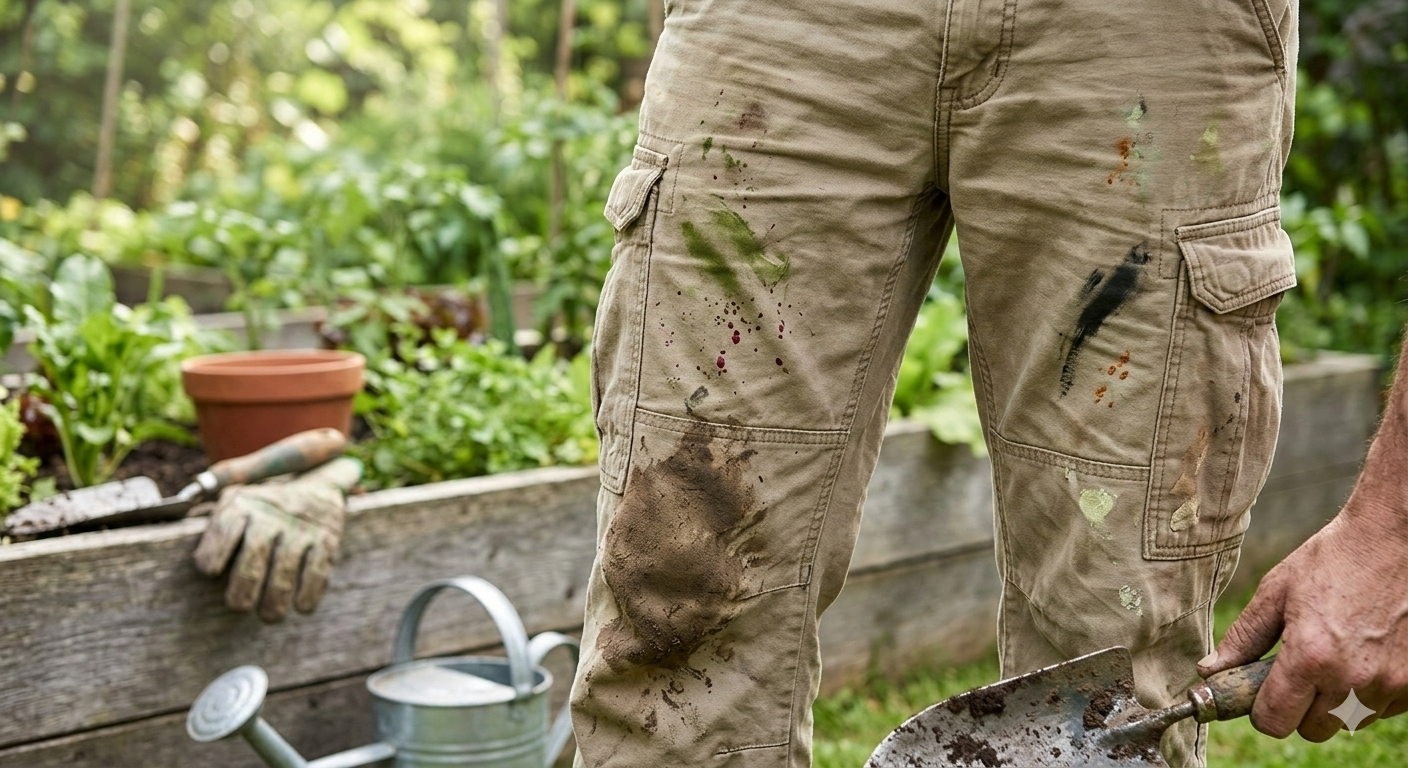
Gardening is a rewarding and relaxing activity that connects people with nature. However, anyone who spends time in the garden knows that it often comes with messy consequences. One of the most common signs of a productive day in the garden is a pair of pants covered in stains. From soil and grass to plant sap and fertilizer, gardeners encounter many substances that can easily leave marks on their clothing.
Understanding what causes these stains can help gardeners prepare better, choose the right clothing, and even learn how to remove stains more effectively. Let’s explore some of the most common things that leave stains on a gardener’s pants and why they happen.
The most obvious cause of stains on gardening clothes is soil. When gardeners kneel, dig, or plant seeds, soil naturally sticks to fabric. If the soil is dry, it may simply brush off. However, when it becomes wet, it turns into mud and can create deep stains.
Mud stains are often darker and more stubborn because they contain minerals and organic matter. Clay-heavy soil is particularly difficult to remove because it binds strongly to fabric fibers. Gardeners who work after rainfall or water their plants frequently are more likely to deal with muddy stains.

2. Grass Stains
Grass stains are another very common problem. These stains happen when gardeners kneel on lawns, trim grass, or work around grassy areas. Grass contains chlorophyll, the green pigment that plants use to produce energy through photosynthesis.
Chlorophyll can easily transfer onto clothing and create bright green stains. These stains can be difficult to remove because the pigment binds tightly to fabric fibers. Children often get grass stains while playing outside, but gardeners face the same issue during lawn care or landscaping tasks.
3. Plant Sap
Many plants produce sap, which is a sticky liquid that flows through plant tissues. When branches are cut, leaves are broken, or stems are trimmed, sap can leak out and stick to clothing.
Sap stains can appear yellow, brown, or even clear at first. Over time, they may darken and become harder to remove. Some plants, such as pine trees or certain shrubs, produce especially sticky sap that clings strongly to fabric.
Gardeners who prune trees, trim hedges, or handle freshly cut plants often notice these types of stains on their pants.
4. Flower Pollen
Flowers may be beautiful, but they can also be messy. Pollen is a fine powder produced by flowers for reproduction. When gardeners handle blooming plants, pollen can easily transfer onto clothing.
Bright yellow, orange, or even purple pollen can leave visible stains on fabric. These stains can sometimes smear if rubbed, making them spread even more.
5. Fertilizer Residue
Fertilizers are commonly used to help plants grow strong and healthy. However, they can also leave stains if they come into contact with clothing. Liquid fertilizers may splash during application, while granular fertilizers can leave dusty marks on fabric.
Some fertilizers contain minerals, nitrogen compounds, or organic materials that can create dark or chemical-looking stains. If fertilizer mixes with moisture or sweat, it may soak deeper into the fabric.
Wearing protective clothing while applying fertilizer can help reduce these types of stains.
6. Compost and Organic Matter
When gardeners spread compost or mix it into soil, small particles can stick to clothing. Compost stains are usually dark brown or black and may carry an earthy smell. Because compost contains natural pigments and moisture, it can stain fabric quickly.
Gardeners who regularly work with compost piles or organic fertilizers often experience these stains.
7. Fruit and Vegetable Juices
Harvesting fruits and vegetables is one of the most satisfying parts of gardening, but it can also be messy. Many fruits and vegetables release colorful juices when they are squeezed, crushed, or overripe.
For example:
- Tomatoes can leave red stains.
- Berries can leave deep purple or blue marks.
- Carrots or pumpkins may leave orange stains.
These juices contain natural pigments that can easily stain clothing if they soak into the fabric.
8. Rust from Garden Tools
Sometimes stains do not come from plants or soil but from gardening tools. Tools such as shovels, pruners, and metal watering cans may develop rust over time.
When rusty tools rub against clothing, they can leave reddish-brown stains. These rust marks may be small at first but can become more noticeable if the metal surface is heavily corroded.
9. Water and Mineral Marks
Water itself usually does not stain clothing, but the minerals in water sometimes can. Hard water, which contains minerals like calcium and magnesium, may leave faint marks on fabric when it dries.
If gardeners frequently water plants using hoses or watering cans, small splashes may leave mineral spots on their pants.
These stains are usually lighter than soil stains but can still be noticeable on dark clothing.
10. Paint or Garden Markers
Some gardeners use plant markers, paint, or colored labels to identify plants. During this process, small amounts of paint or ink may accidentally touch clothing.
- Wear old clothes or dedicated gardening pants.
- Use knee pads instead of kneeling directly on the ground.
- Wash clothing soon after gardening to prevent stains from setting.
- Wear an apron when handling messy materials like compost or fertilizer.
Many experienced gardeners keep a separate set of clothes just for garden work.
Conclusion
Stains on a gardener’s pants are often a sign of hard work and time well spent outdoors. Soil, grass, plant sap, pollen, fertilizer, compost, fruit juices, rust, and other materials can all leave marks on clothing during gardening activities.
In the end, a few dirty clothes are a small price to pay for the joy of growing plants, harvesting fresh produce, and spending peaceful time in the garden. Gardening may be messy, but it is also one of the most rewarding activities anyone can enjoy.