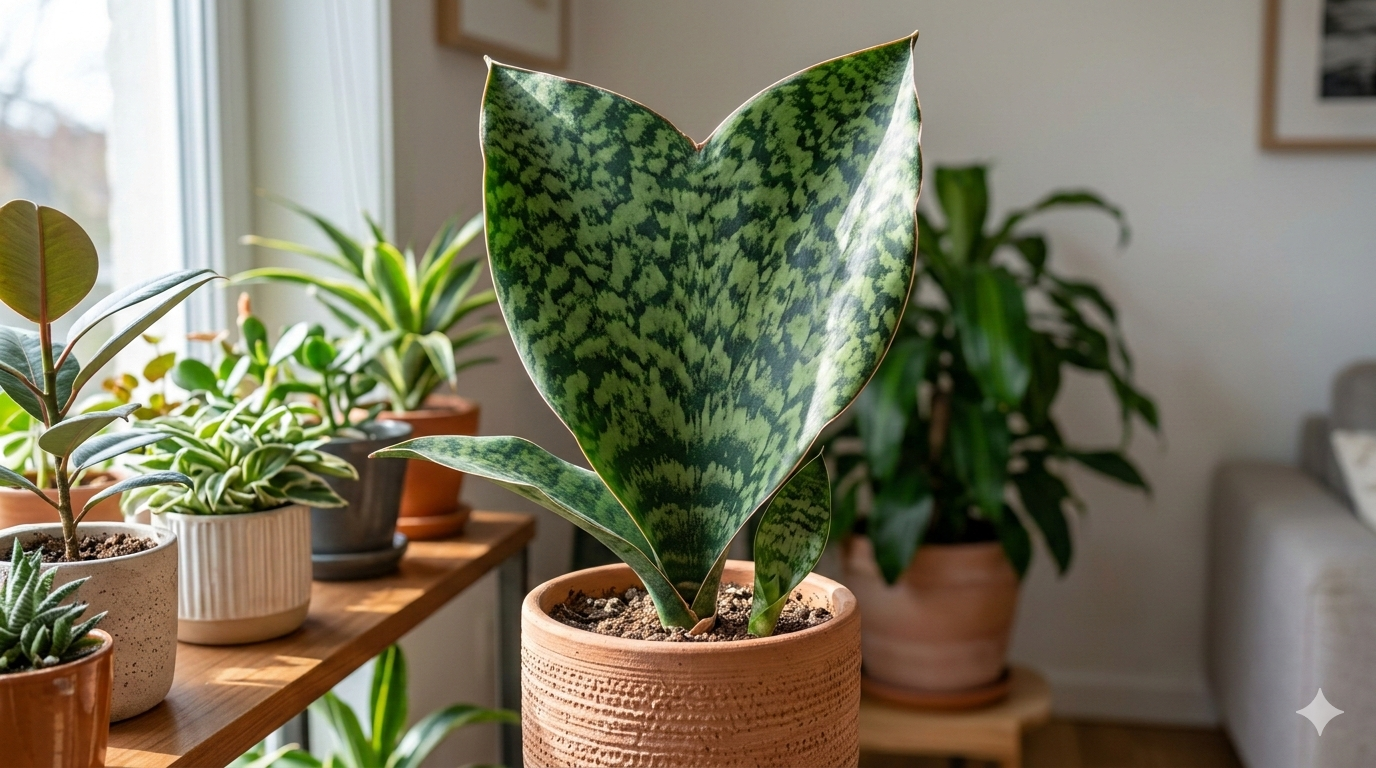
The Whale Fin Plant is one of the most striking and unique houseplants you can add to your indoor collection. Known for its massive, paddle-shaped leaf that resembles the fin of a whale rising from the ocean, this plant has become increasingly popular among plant lovers. Its modern look, low maintenance needs, and strong architectural presence make it a perfect choice for homes and offices.
If you are searching for a plant that stands out while being easy to care for, the Whale Fin Plant might be exactly what you need.
What Is a Whale Fin Plant?
The Whale Fin Plant is a special variety of snake plant. It belongs to the Sansevieria family and is often referred to as Sansevieria Masoniana. Recently, snake plants have been reclassified under the Dracaena genus, but many gardeners still use the original name.
Unlike traditional snake plants that grow multiple upright leaves, the Whale Fin variety often produces one large, thick leaf that grows vertically. Over time, it may produce additional leaves, but the single dramatic leaf is what makes it so unique.

Appearance and Features
The most noticeable feature of the Whale Fin Plant is its enormous leaf. The leaf is broad, thick, and sturdy, with a slightly curved shape. It has beautiful dark green coloring with lighter green marbled patterns across the surface.
A mature leaf can grow up to three to four feet tall and more than ten inches wide under ideal conditions. The leaf’s shape resembles a whale’s fin breaking through water, which gives the plant its common name.
Why Choose a Whale Fin Plant?
There are several reasons why this plant has become so popular:
- Low maintenance
- Drought tolerant
- Air-purifying qualities
- Unique visual appeal
- Suitable for beginners
It is an excellent option for people who want a statement plant without complicated care requirements.
Light Requirements
The Whale Fin Plant is adaptable when it comes to lighting. It grows best in bright, indirect sunlight but can tolerate lower light conditions as well.
For optimal growth:
- Place it near a window with filtered light.
- Avoid harsh direct sunlight, which may scorch the leaf.
- Low light slows growth but usually does not harm the plant.
Because it adapts easily, it works well in living rooms, bedrooms, or offices.
Watering Needs
Here’s how to water properly:
- Allow the soil to dry completely between waterings.
- Water deeply but infrequently.
- Reduce watering during winter months.
In most indoor conditions, watering every two to three weeks is sufficient.
Soil and Potting
Well-draining soil is essential for healthy roots. A cactus or succulent potting mix works perfectly because it prevents excess moisture from building up.
Always choose a pot with drainage holes. Without proper drainage, water can collect at the bottom and cause root rot.
Temperature and Humidity
This plant thrives in normal indoor temperatures between 18°C and 29°C (65°F to 85°F). It does not tolerate freezing temperatures, so keep it away from cold drafts or open windows during winter.
Average indoor humidity is usually fine. It does not require misting or extra humidity, which makes it even easier to maintain.
Fertilizing
The Whale Fin Plant is not a heavy feeder. During spring and summer, you can apply a balanced liquid fertilizer once a month. Avoid over-fertilizing, as it can damage the roots.
In fall and winter, fertilizing is not necessary since the plant’s growth slows down.
Growth Rate
This plant grows slowly. Do not expect rapid changes. A new leaf may take months to appear, but when it does, it adds impressive height and structure.
Patience is important with this plant. Slow growth also means less frequent maintenance.
Propagation
The Whale Fin Plant can be propagated through leaf cuttings or division.
Leaf cuttings involve cutting a section of the leaf and placing it in soil to root. However, this method may result in a plant that loses the original marbled pattern.
Division is the preferred method. When repotting, you can separate new offshoots from the main plant and replant them in separate pots.
Common Problems
Although it is hardy, a few issues can occur:
Yellowing Leaves
Usually caused by overwatering. Allow soil to dry fully before watering again.
Soft or Mushy Base
This may indicate root rot. Remove the plant from the soil, trim damaged roots, and repot in fresh, dry soil.
Brown Spots
Often due to too much direct sunlight or inconsistent watering.
Most problems are easily preventable with proper care.
Air-Purifying Benefits
Like other snake plants, the Whale Fin Plant is known for helping improve indoor air quality. It absorbs certain toxins and releases oxygen, contributing to a fresher indoor environment.
This makes it not only decorative but also beneficial for home health.
Styling Tips
Because of its bold and sculptural look, the Whale Fin Plant works beautifully as:
- A floor plant in a decorative pot
- A centerpiece in modern interiors
- An accent plant in office spaces
- A gift for plant enthusiasts
Neutral-colored pots highlight the deep green leaf and enhance its dramatic appearance.
Final Thoughts
The Whale Fin Plant is a perfect combination of beauty and simplicity. With its impressive leaf shape, low water needs, and adaptability to different light conditions, it is ideal for both beginners and experienced plant lovers.
Its slow growth and minimal care requirements make it a long-lasting addition to any indoor space. By providing proper light, well-draining soil, and careful watering, you can enjoy this stunning plant for many years.
If you are looking for a plant that makes a strong visual statement without demanding constant attention, the Whale Fin Plant is an excellent choice. It brings a touch of nature’s bold elegance into your home while remaining easy to care for and maintain.