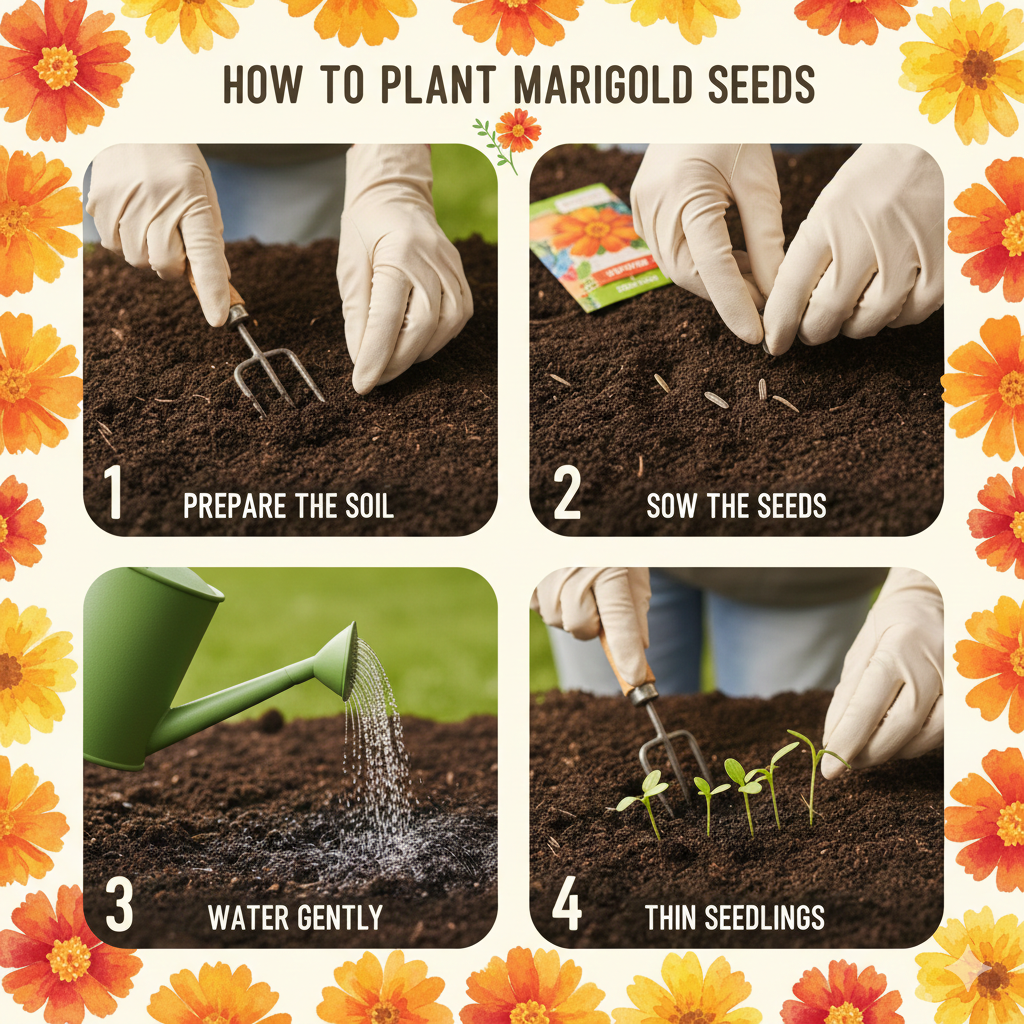
Marigolds are bright, cheerful flowers that are perfect for beginner gardeners. They grow quickly, require little maintenance, and bloom for a long season. If you want to add vibrant yellow, orange, or golden colors to your garden, learning how to plant marigold seeds is a simple and rewarding process.
Marigolds belong to the genus Tagetes and are popular in gardens around the world. Two common varieties include Tagetes erecta (African marigold), which grows taller with large blooms, and Tagetes patula (French marigold), which is smaller and bushier. Both types are easy to grow from seed.
Best Time to Plant Marigold Seeds
Marigolds love warm weather. The best time to plant them outdoors is after the last frost in spring. The soil temperature should be warm, ideally above 60°F (15°C). If you live in a colder area, you can start seeds indoors about 4–6 weeks before the last frost and transplant them later.
These flowers thrive in full sunlight, so choose a location that receives at least 6 hours of direct sun daily.
Materials You Will Need
Before planting, gather these items:
- Marigold seeds
- Garden soil or potting mix
- Small pots or seed trays (if starting indoors)
- Watering can or spray bottle
- Compost (optional)
Having everything ready makes planting easier and more organized.

Step 1: Prepare the Soil
Healthy soil helps marigolds grow strong and produce many flowers.
For garden beds:
- Loosen the soil about 6–8 inches deep.
- Remove weeds and stones.
- Mix in compost to improve nutrients.
- Make sure the soil drains well.
For containers:
- Use pots with drainage holes.
- Fill with light, well-draining potting mix.
- Avoid heavy clay soil in pots.
Marigolds are not very demanding, but well-prepared soil improves growth and blooming.
Step 2: Plant the Seeds
Marigold seeds are long and thin, making them easy to handle.
To plant outdoors:
- Make small holes about ¼ inch deep.
- Place one seed in each hole.
- Cover lightly with soil.
- Gently press the soil down.
- Water lightly.
Space seeds 8–12 inches apart depending on the variety. Taller types need more space than dwarf types.
To plant indoors:
- Fill seed trays with seed-starting mix.
- Place one seed in each cell.
- Cover lightly with soil.
- Mist gently with water.
- Place the tray in a warm, sunny spot.
Seeds usually germinate within 5–10 days.
Step 3: Water Properly
Watering is very important during germination.
- Keep the soil slightly moist.
- Do not overwater.
- Avoid waterlogging, which can cause root rot.
- Water at the base of the plant once seedlings appear.
Once established, marigolds are somewhat drought-tolerant but still benefit from regular watering.
Step 4: Provide Enough Sunlight
Marigolds grow best in full sun. Without enough sunlight, plants may become weak and produce fewer flowers.
If growing indoors:
- Place seedlings near a sunny window.
- Or use grow lights for 12–14 hours daily.
Strong sunlight encourages healthy stems and vibrant blooms.
Step 5: Thin the Seedlings
When seedlings grow about 2–3 inches tall:
- Remove weaker plants.
- Keep the strongest ones.
- Ensure proper spacing for airflow.
Thinning prevents overcrowding and reduces the risk of disease.
Step 6: Transplanting (If Started Indoors)
If you started seeds indoors, harden off seedlings before transplanting. This means gradually exposing them to outdoor conditions over 7 days.
When ready:
- Dig a hole slightly larger than the root ball.
- Place the plant gently.
- Fill with soil.
- Water thoroughly.
Transplant after all danger of frost has passed.
Fertilizing Marigolds
Marigolds do not require heavy feeding. Too much fertilizer, especially nitrogen, can cause more leaves and fewer flowers.
- Add compost when planting.
- Use balanced fertilizer once a month if needed.
- Avoid overfeeding.
Moderate nutrients encourage better blooming.
Deadheading for Continuous Blooms
To keep marigolds blooming:
- Remove faded flowers regularly.
- Pinch off old blooms.
- This encourages new buds to form.
Deadheading keeps plants neat and increases flower production throughout the season.
Common Problems and Solutions
Seeds Not Sprouting:
- Soil may be too cold.
- Seeds planted too deep.
- Soil too dry.
Yellow Leaves:
- Overwatering.
- Poor drainage.
- Nutrient imbalance.
Few Flowers:
- Not enough sunlight.
- Excess nitrogen fertilizer.
Pests:
Marigolds naturally repel many insects, but sometimes aphids or spider mites may appear. A gentle spray of water or mild insecticidal soap can solve the issue.
Growing Marigolds in Pots
Marigolds are excellent for container gardening. Choose medium-sized pots with good drainage. Place them on balconies, patios, or sunny windowsills.
Container tips:
- Water when the top inch of soil feels dry.
- Ensure at least 6 hours of sunlight.
- Avoid overcrowding.
Container-grown marigolds brighten small spaces beautifully.
Saving Seeds for Next Season
At the end of the growing season:
- Let flowers dry on the plant.
- Remove dried flower heads.
- Collect the seeds inside.
- Store in a cool, dry place.
Saved seeds can be planted the following year.
Final Thoughts
Planting marigold seeds is simple and rewarding. With warm weather, full sunlight, and proper watering, these flowers grow quickly and bloom generously. Whether planted in garden beds or containers, marigolds add bright color and charm to any space.
By following these easy steps, you can enjoy a long season of beautiful blooms grown from seeds you planted yourself.